Finding the Frequency with Blind John’s Guitars.
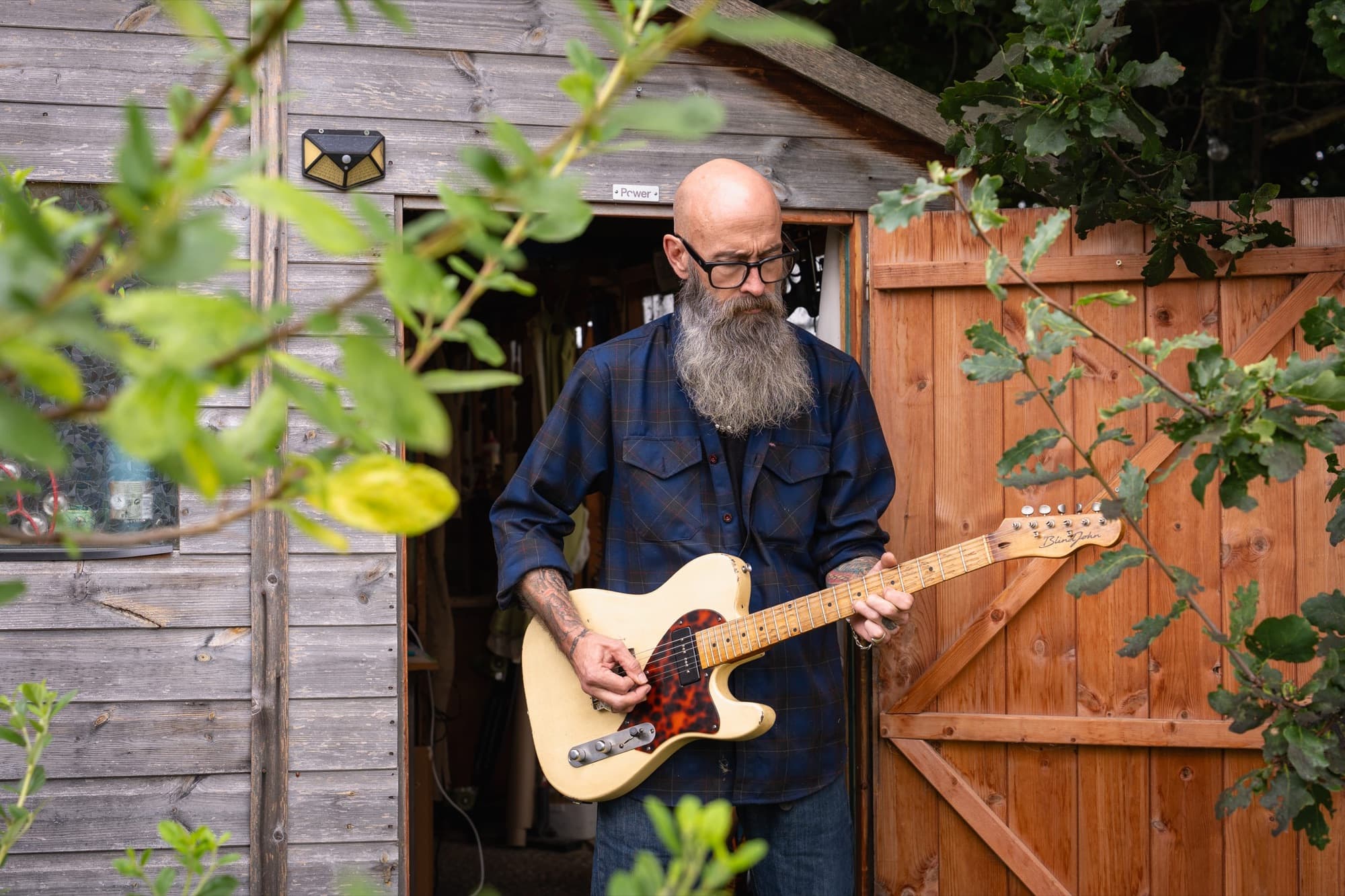
Blind John makes relic electric guitars, one at a time, in a shed at the bottom of a garden in Suffolk. We made his new site — the design, the photographs, the recordings, the build — and a way to commission a guitar that starts with how you play.
It started with a reply.
Our relationship with John began with an email. We’d written to him on the off chance he might want a new site, and he wrote back. It was an honest reply, and an engaging one, and it laid out the problems he had with the site he’d got.
They’re problems a lot of small makers share. His Squarespace site did the mechanics: here’s the homepage, here’s a product. What it never made room for was the story — who John is, what he makes and why, and all the very small details that add up to a real experience of a brand. That isn’t all the platform’s fault. It also takes someone with a fresh eye to bring those details to the fore. Which is where we came in.
Surveying the site.
John builds guitars by hand, so a building analogy seems fair. Before anything was made, we surveyed the whole job: recordings of his guitars, new photographs, a clean look, the typography, and how his logo would sit within all of it. His logo is strong. Everything had to hang off it.
We put that in front of John as what we would do, and he gave us carte blanche. That’s a very trusting thing to be handed, and we hope we’ve earned it.
Little frequencies.
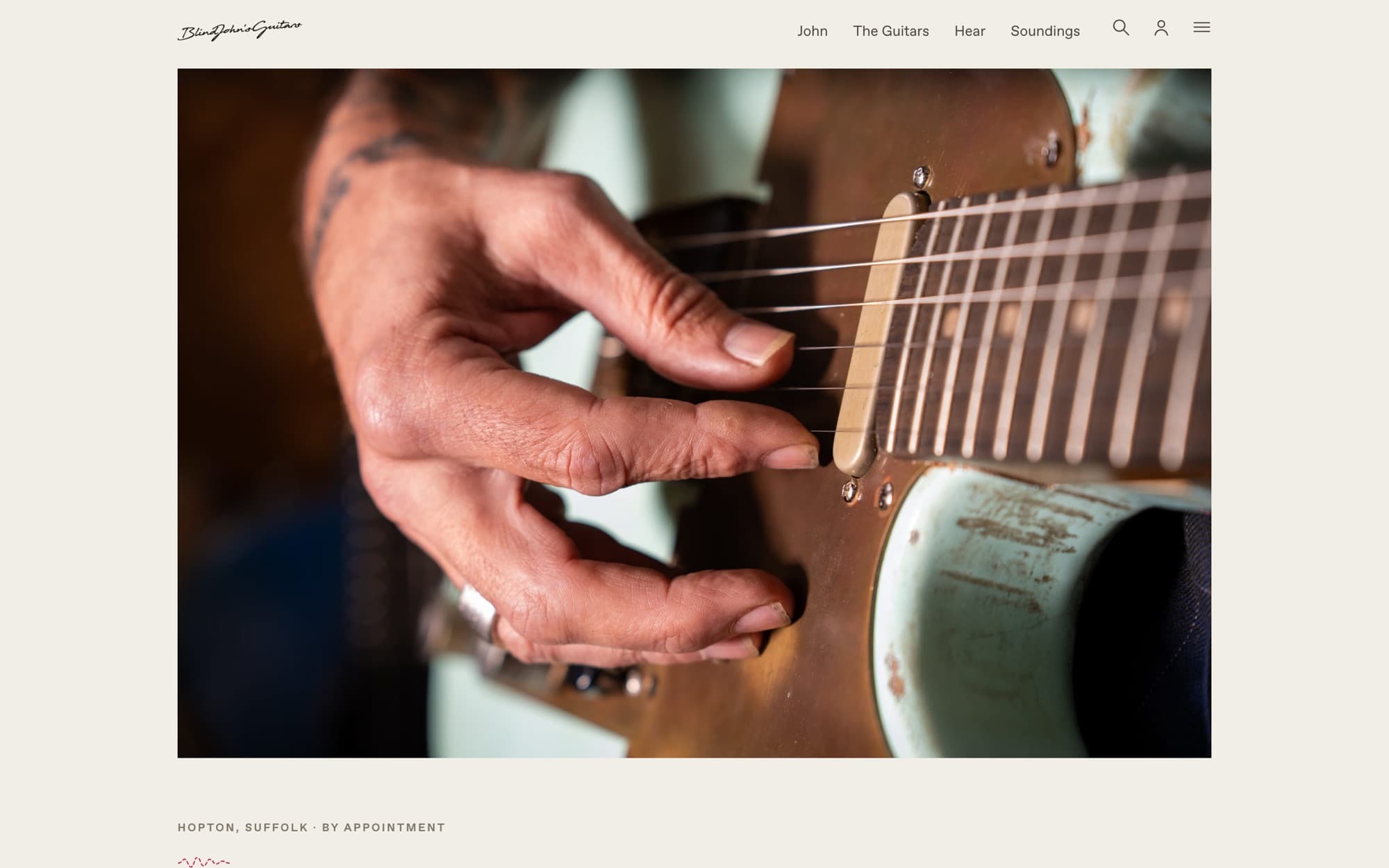
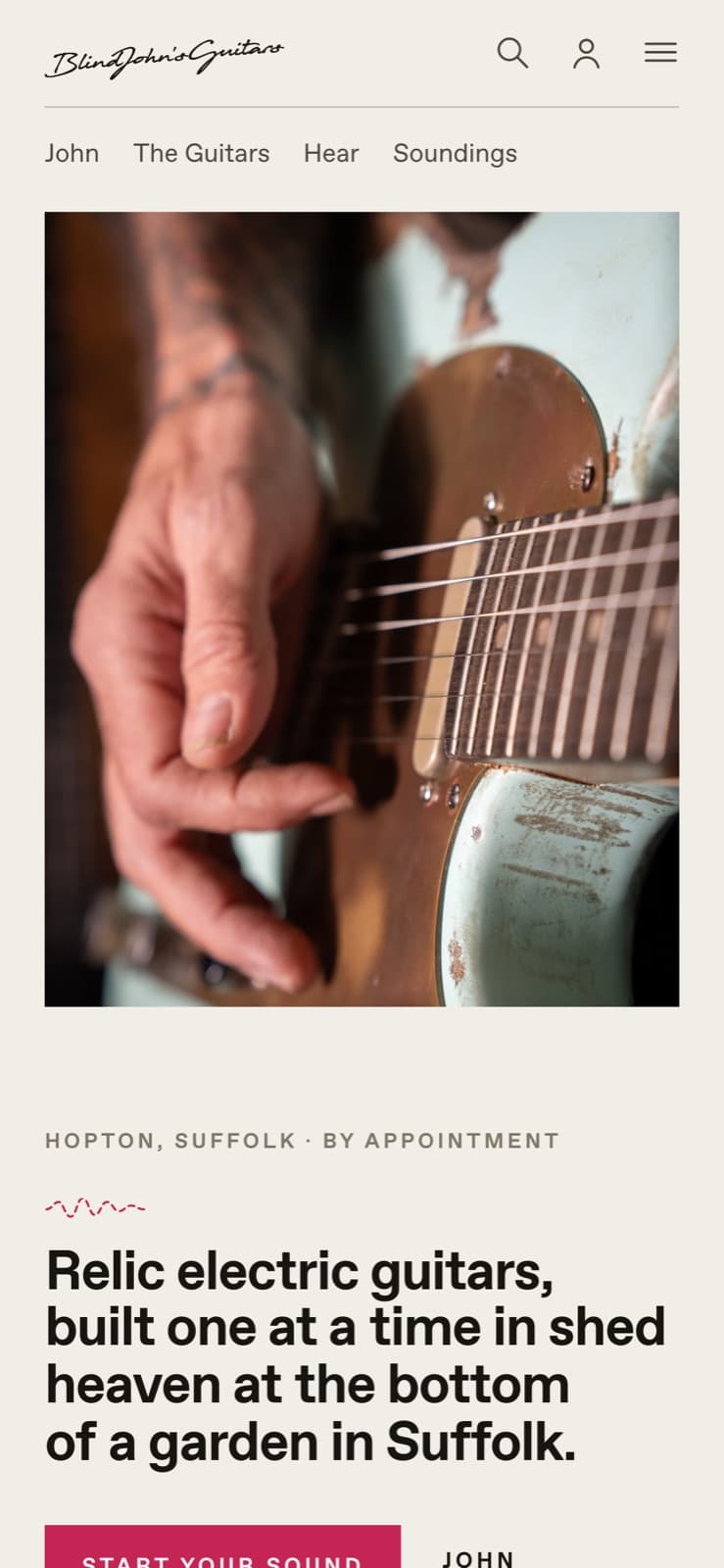
The design leaned into the feeling of sound waves, which led us to actual waves: how smooth they are, and the space between them.
Every page carries a lot — models, specs, prices, John’s own account of each build. The work was making all of that read like an editorial and never feel overwhelming. So each page has natural moments to take a pause: to listen to a guitar, or to pick up a tidbit that feeds in from another page. Little frequencies, you might say.
a small wave sits under the section labels on his site. it started as a doodle of a sound wave and stayed.
A day in the shed.
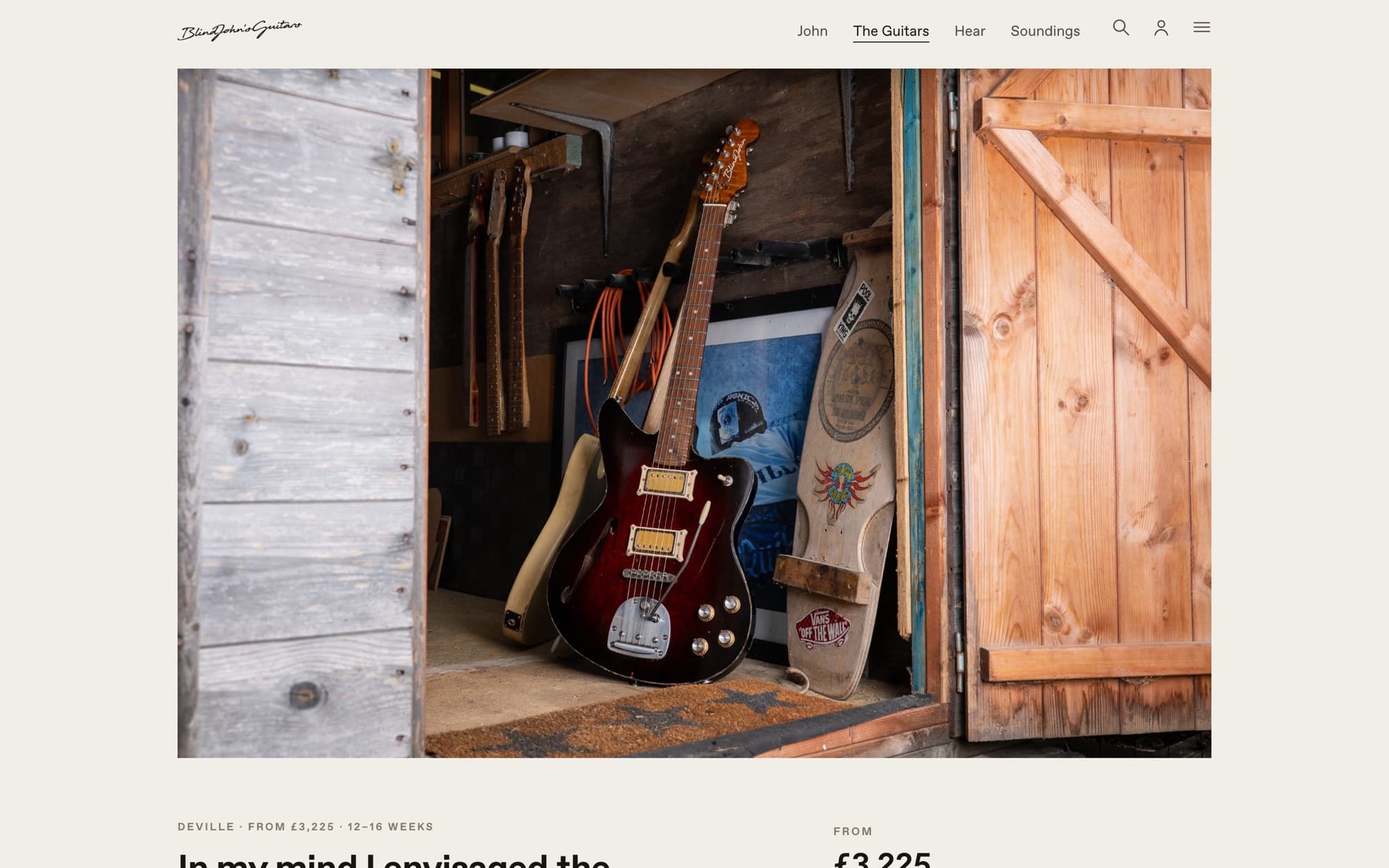
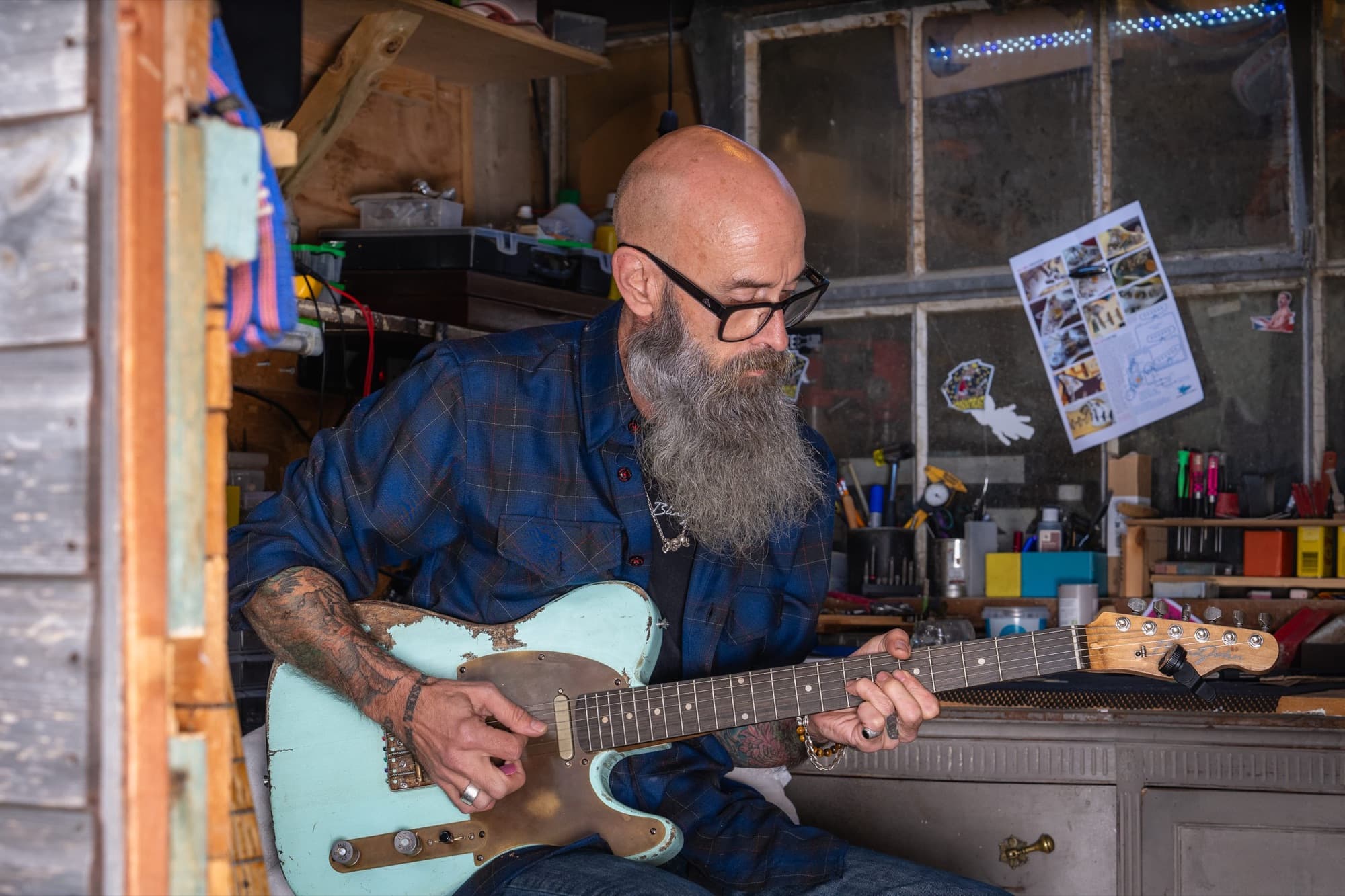
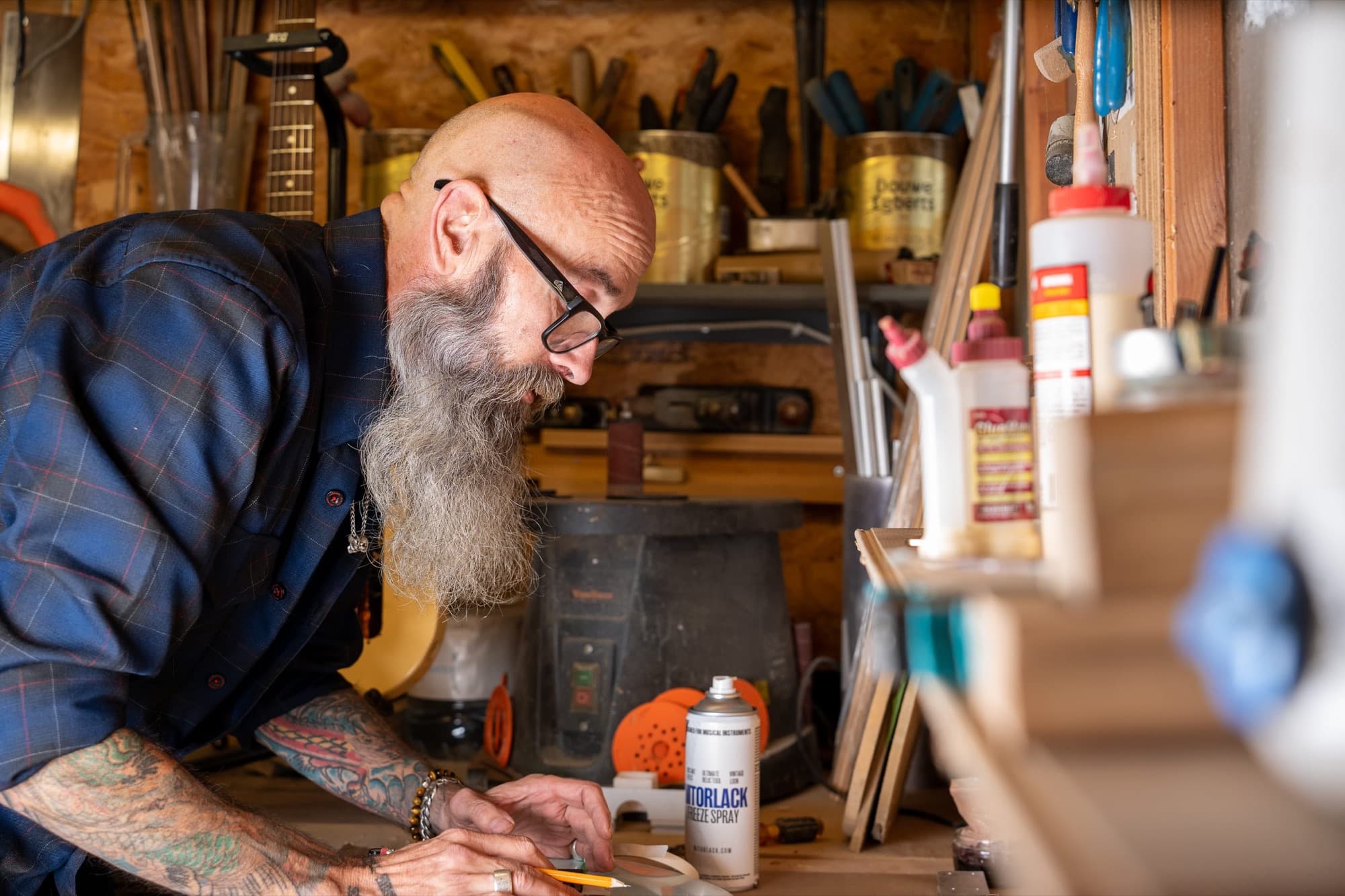
Once we’d settled on how it would look, the question became very obvious: when were we going over to Suffolk? It’s a fair drive from Oxford, and we happily made it in September, spending the day shooting John, his guitars, and the shed where he makes everything. A real, genuine makerspace.
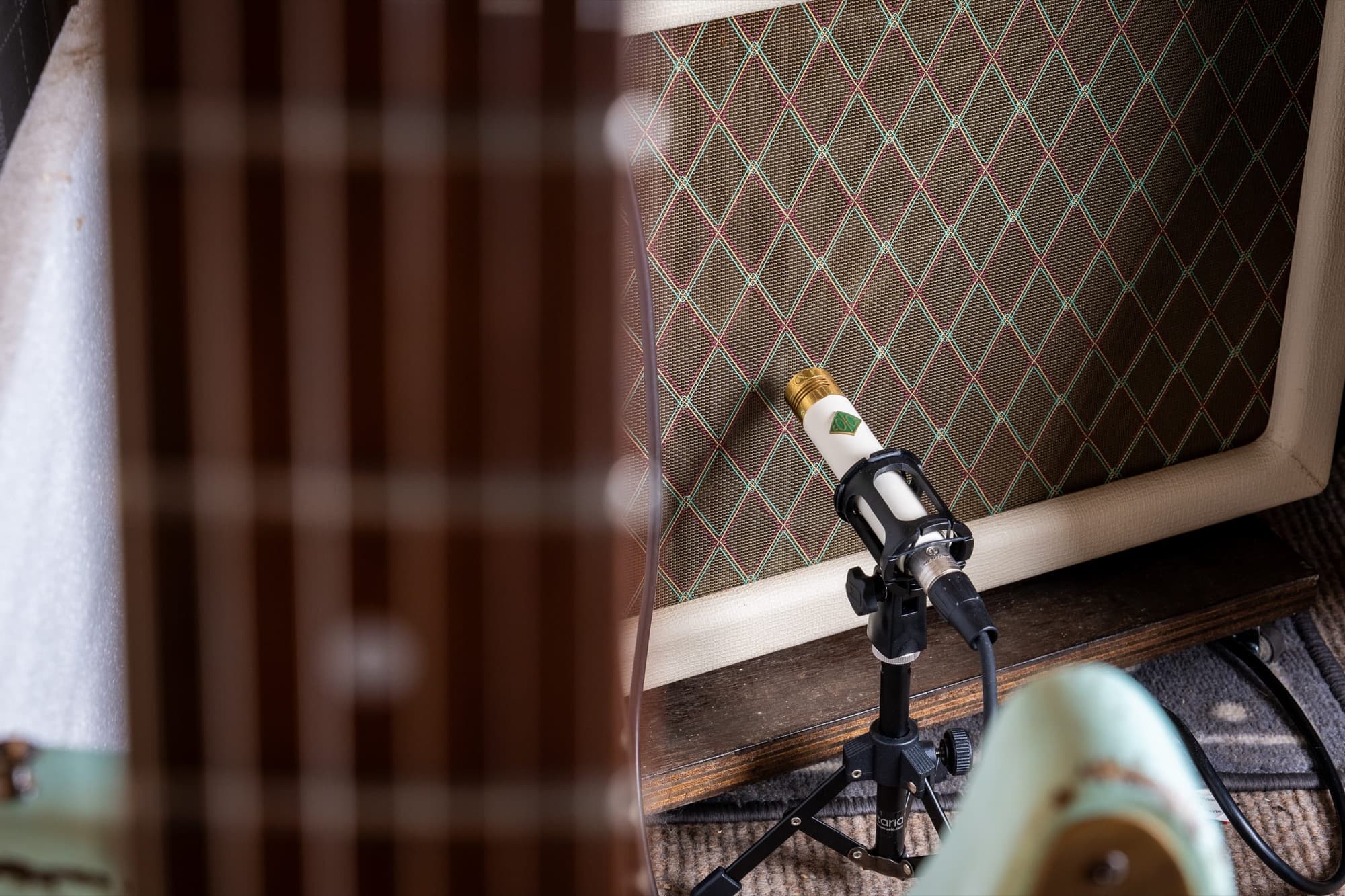
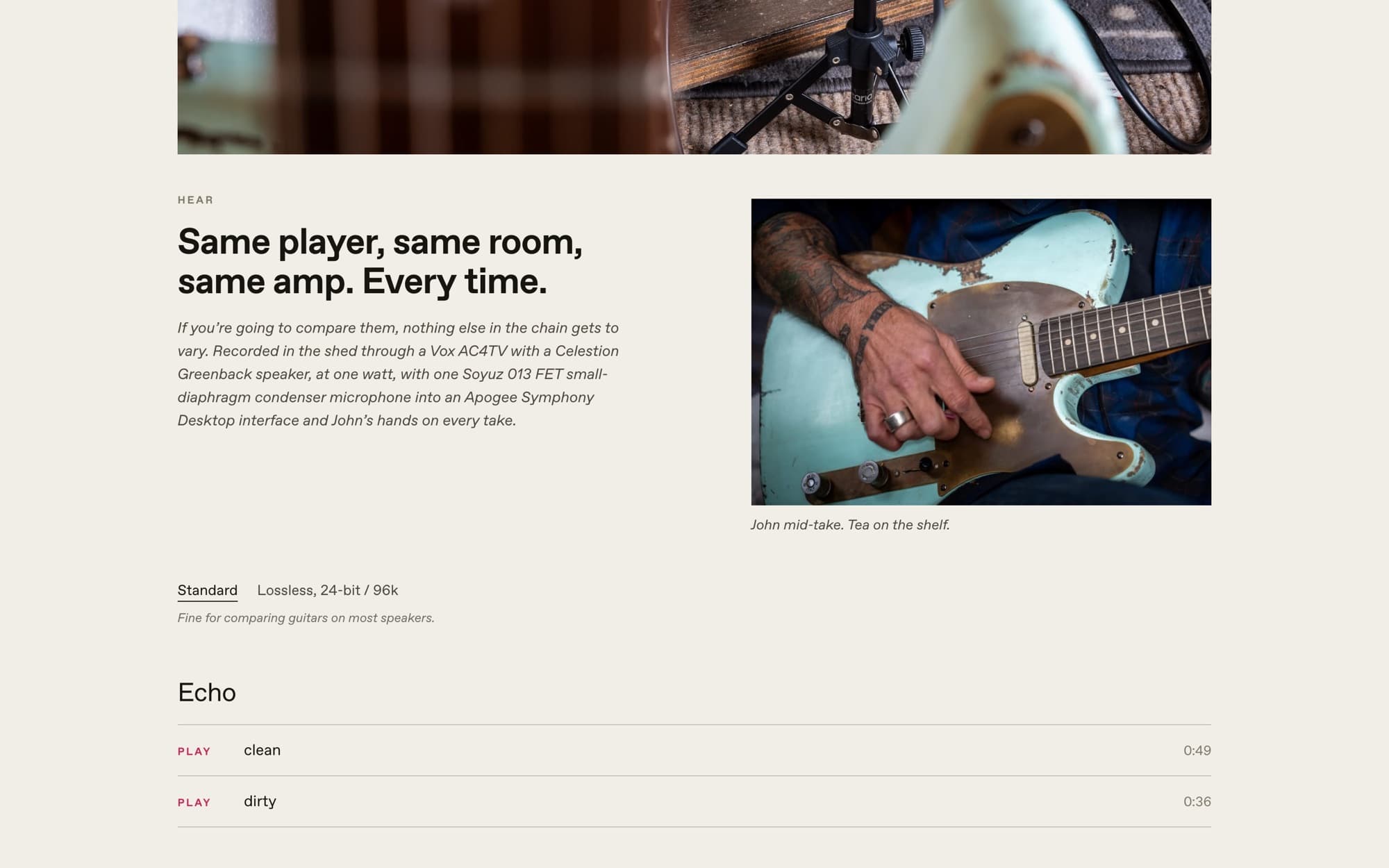
We took our recording rig too, and John played every one of his guitars in different settings, clean and dirty. We play ourselves, and with John, serendipitously, it pulled on all the right strings for us: photography, recording, words. We’d have loved to shoot some video, but the day ran out. Maybe that’s another trip.
Back home we processed the audio. On his site you can listen in lossless, 24-bit/96k, if your system can handle it, or in an optimised version for everything else. Then the photographs went up, and we worked on the selection. There was some lovely light on the day — not consistent, but good, and where it dropped we used a flash. With the images in, the whole site suddenly felt alive. The typography, the space, the feeling in the photographs, John’s touch on his own guitars: everything started working together.
The bath, not the house.
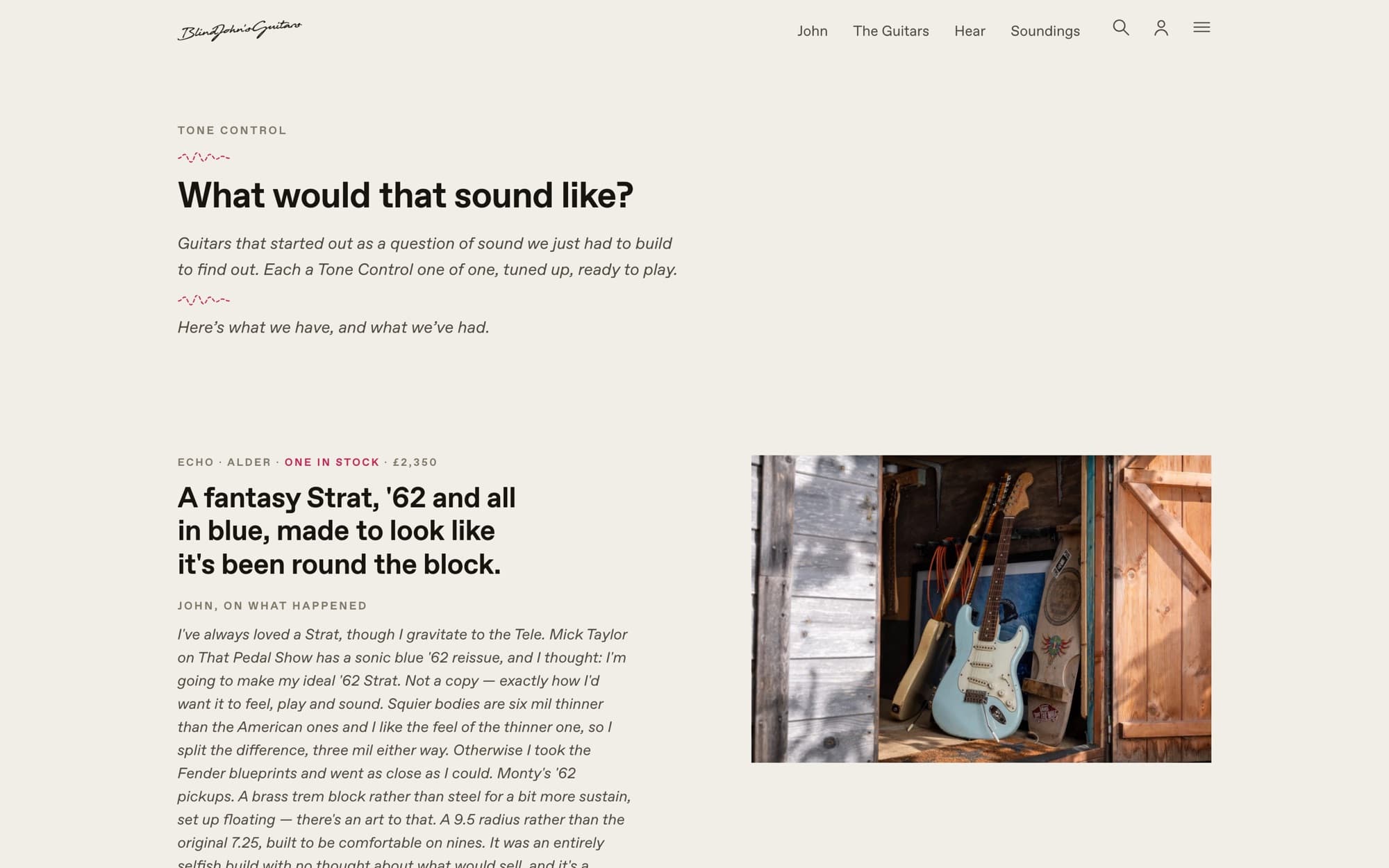
The site sells guitars. John’s one-offs, which we called Tone Control — experiments in sound, the ideas he has at three in the morning — can be bought outright on the site, through a Stripe checkout that creates an account for the buyer. A full, first-class buying experience.
But it isn’t a shop with a site attached. It’s a headless build, Next.js with a Sanity back end, with e-commerce placed where it’s needed. That makes for a site that’s fast and easy to use, and should wear well. E-commerce often drives an entire site, whether selling is the reason the site exists or not. It’s like a house where the bath is 99% of the house. How often are you having a bath, and how big does it need to be?
For John, it needed to be there and to work really, really well. It didn’t need to dominate, or slow the pages down. For a maker like John, the content is most of the site, and always will be.
Commissioning a guitar.
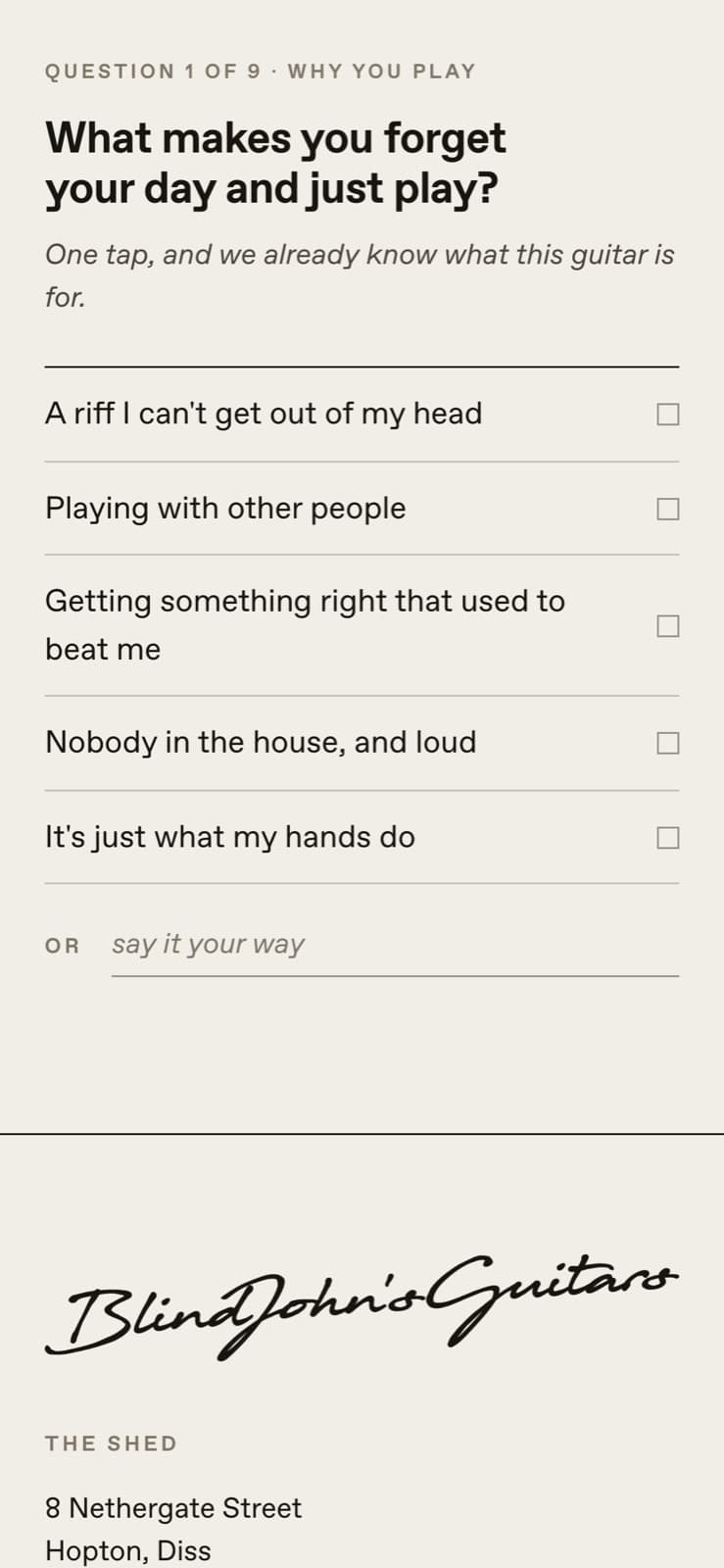
New commissions get their own flow. We spent a lot of time on the questions with John. What makes you pick up a guitar? What’s the first thing you play? Who blows your mind? There are nine, all about how you play and not one about the spec.
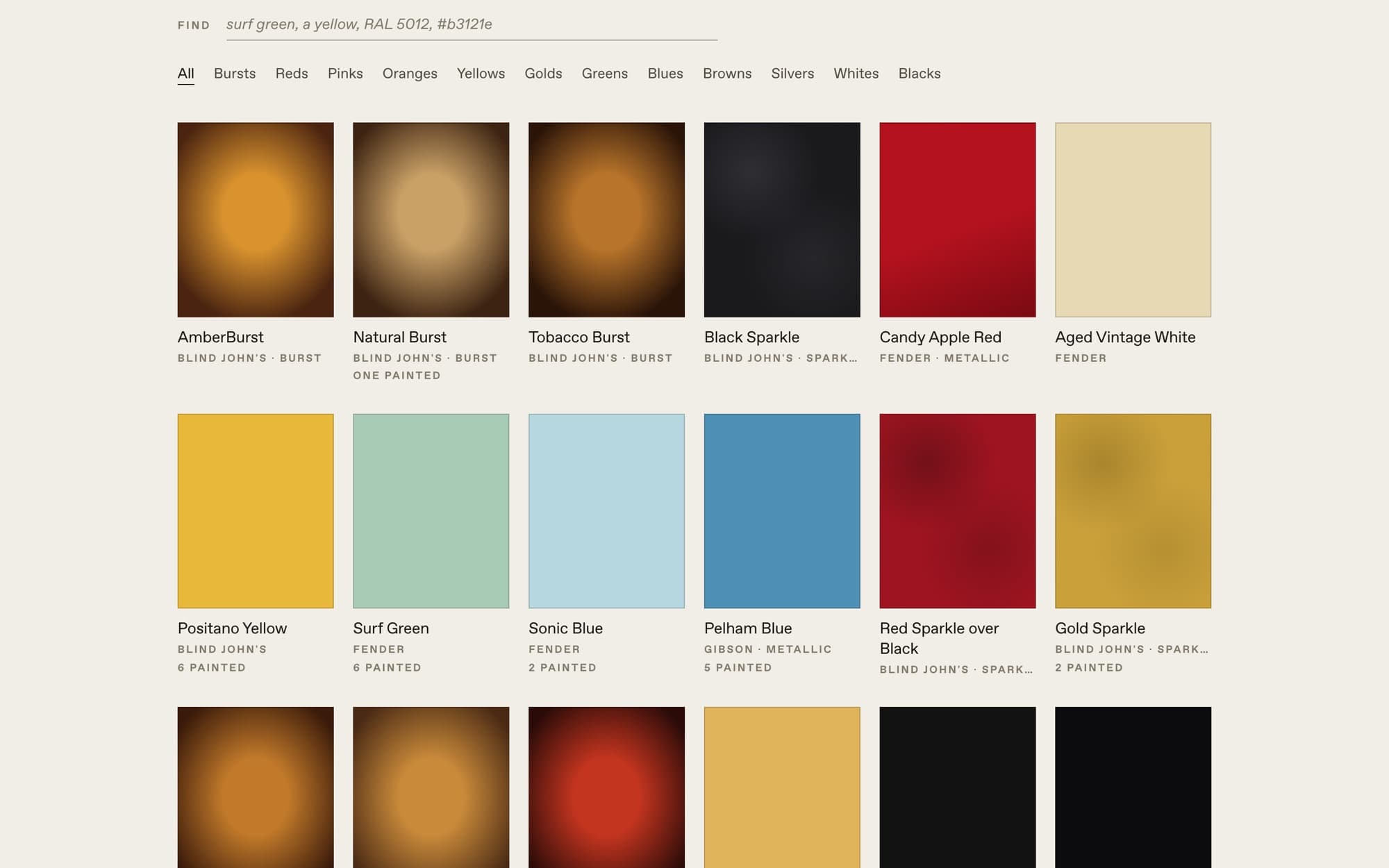
As someone works through them, their answers become a build sheet in plain words — close to what John would recommend — with a from-price and a lead time. Along the way they can pick through John’s colours, add them to their account and send them over as inspiration. That’s an idea we first had on the Pegoretti site, and it carried across completely: picking a colour for your guitar isn’t far from picking one for your bicycle.
The idea goes to John. He works on it and sends back some thoughts, and when it’s time, a Stripe payment link that ties into the customer’s account. The whole thing becomes a record of provenance for the guitar in progress.
Plenty of commissions still start with an email, so those have a door too. John speaks to the site — who the guitar is for, the details, the price, the lead time — and it writes down what he says. He checks it, edits what needs editing, and sends a deposit request. When the customer pays, their account is made for them, and from then on they can follow the build as John updates it. At John’s numbers, simple was the whole point. He didn’t have to learn any new technology for any of it. It just works.
Live.
We’re really proud to get this one live. It was lovely to have a hand in so many parts of it, with so much trust from John, and we hope he feels that trust was rewarded.
It’s the work we want to be known for: a custom site made with the same care a maker gives his craft. Easy for the brand to run, a pleasure for the customer to use, with the technology, the taste and the maker’s story all pulling the same way, and the e-commerce right where it belongs. And if you love handmade guitars, Blind John’s new site is live now.
- Design and typography, built around John’s wordmark
- Photography of John, his guitars and the shed, on location in Suffolk
- Every guitar recorded in the shed, clean and dirty, standard and lossless
- Headless build on Next.js and Sanity
- Tone Control one-offs, bought outright through Stripe, with customer accounts
- A nine-question commission flow that ends in a build sheet, a from-price and a lead time
- A colour library customers can save and send to John
- Orders by voice: John dictates a commission, checks it and sends the deposit request; the customer follows the build from their account
- Soundings: pieces in John’s own words